 Circuit
They'll Build a Robot
Before They Finish
Fifth Grade.
Circuit is a hands-on maker lab inside your child's own school. Kids wire real circuits, code autonomous bots, and present at a live showcase — all before 5pm pickup.
Select your child's age group
No credit card · Free trial session available
One semester.
Five steps. One working robot.
Each card below is a real chapter of the Circuit semester. Tap any card to see what kids actually build.
Meet Your Kit
"Open the box. Start the adventure."
👆 Tap to see the project
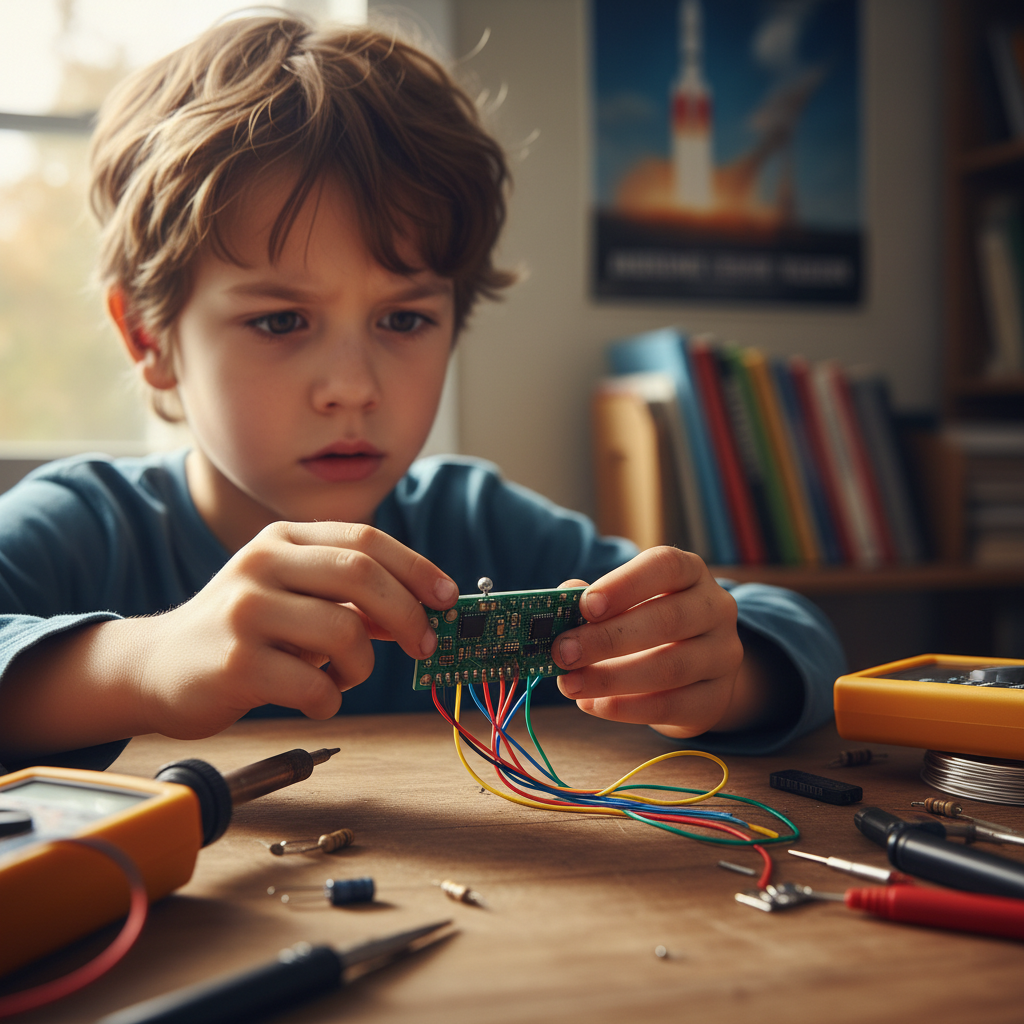
Kids unbox their Circuit Starter Kit — servo motors, LED strips, jumper wires, a breadboard, and their first microcontroller. They learn what each part does by touching it, breaking it, and fixing it.
🔧First project: Make an LED blink
Learn the Basics
"Electricity explained with cookies and flashlights."
👆 Tap to see the project
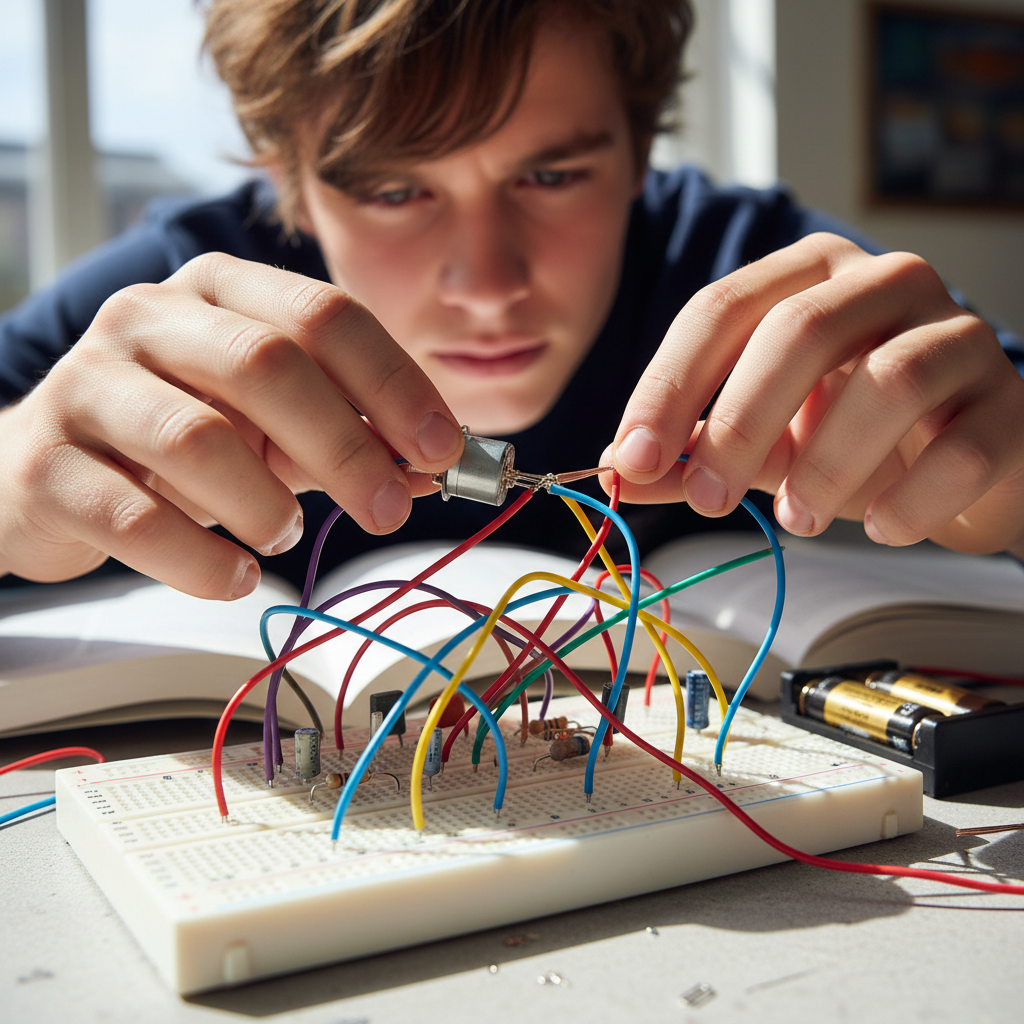
Through hands-on experiments, kids discover voltage, current, and resistance — without the boring equations. They build simple circuits, learn to read a wiring diagram, and wire their first motor.
🔧Project: Spin a motor with a button
Build Your First Bot
"Cardboard, zip ties, and a whole lot of grit."
👆 Tap to see the project
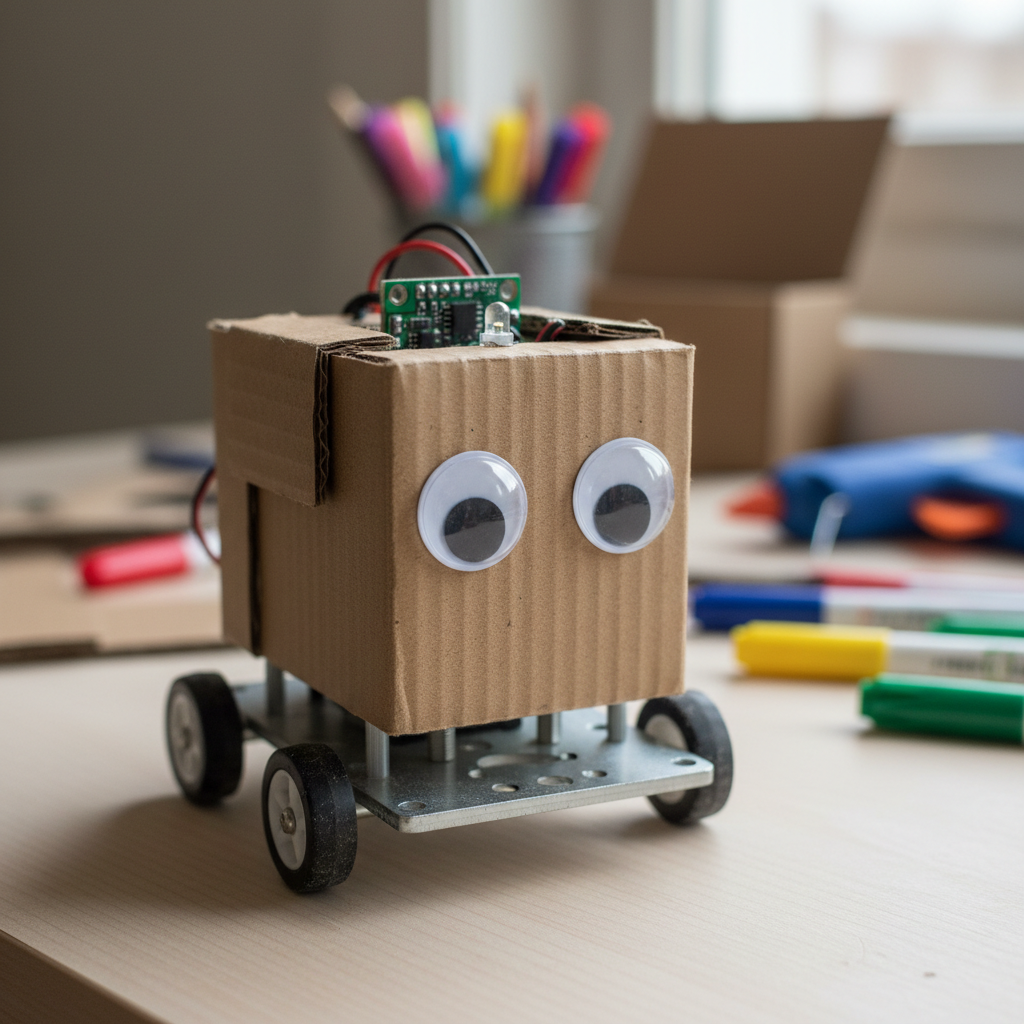
Using a chassis kit plus whatever they can find (cereal boxes, pool noodles, cardboard tubes), kids assemble their first mobile robot. Two motors, four wheels, and one very proud kid.
🔧Project: A rolling robot with googly eyes
Code It to Move
"Block code first. Python when they're ready."
👆 Tap to see the project
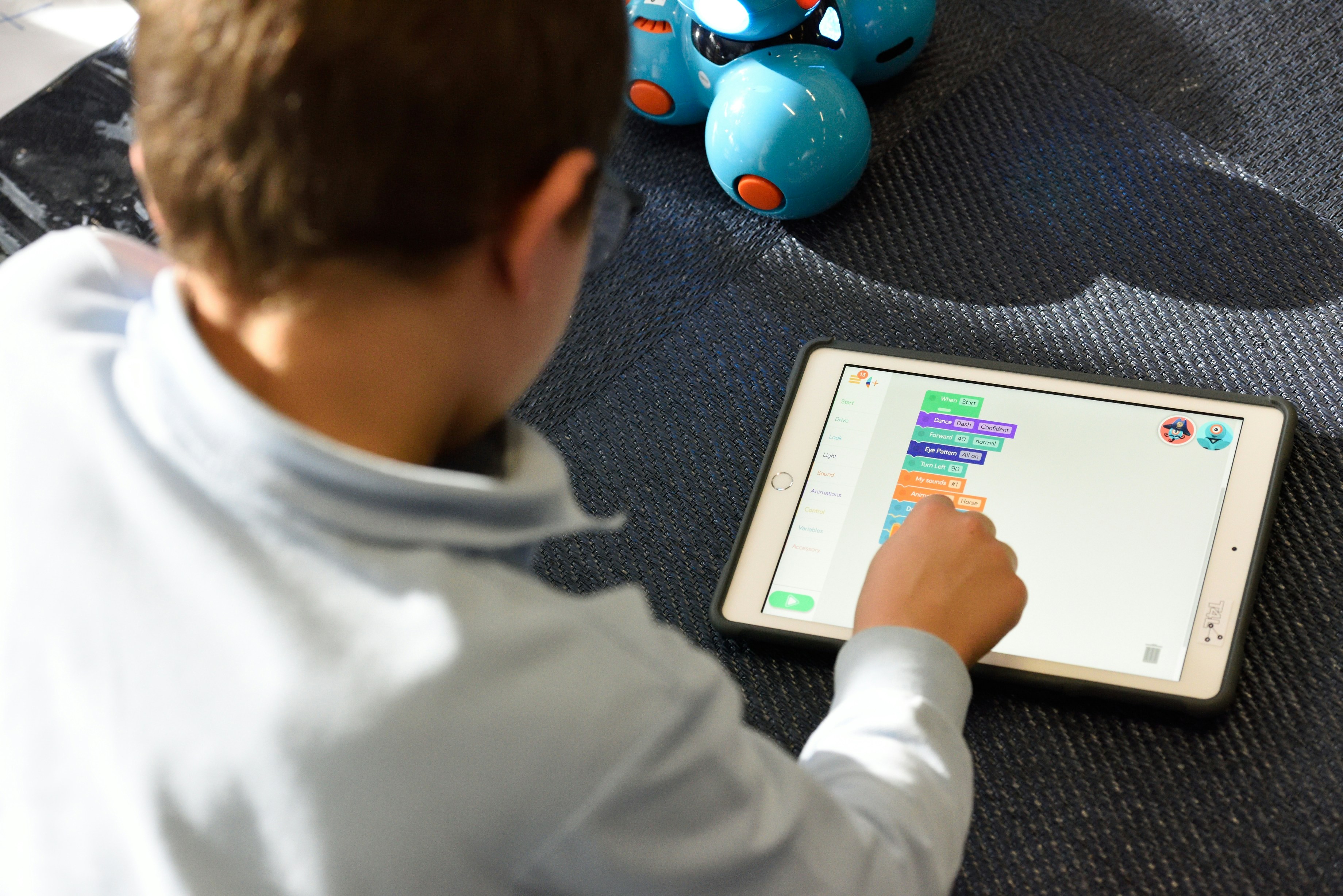
Kids program their bot using visual block coding (ages 6–8) or entry-level Python (ages 9–12). They write loops, conditionals, and sensor-response logic — and watch their robot obey commands in real time.
🔧Project: Bot navigates a 5-obstacle course
Compete & Demo
"Parents in the bleachers. Robots on the course."
👆 Tap to see the project
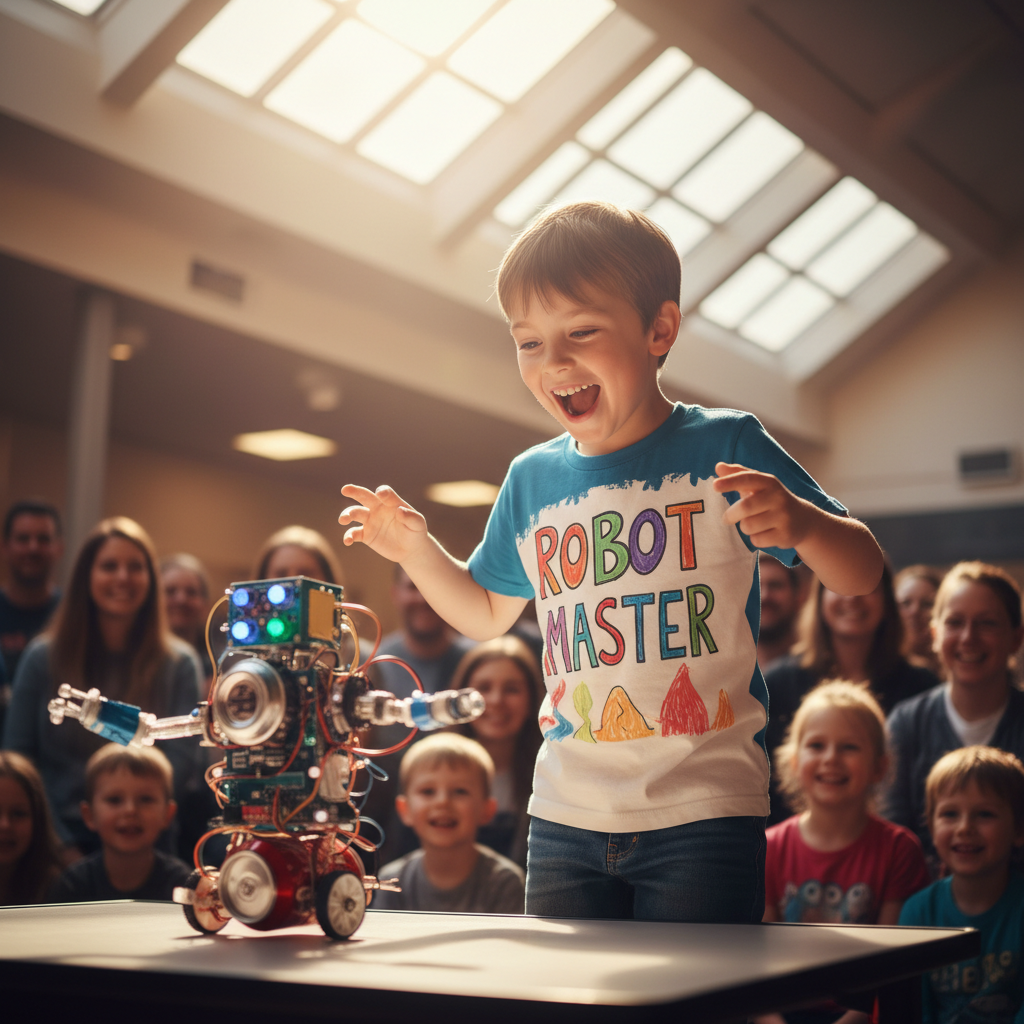
Each semester ends with a live showcase. Kids present their bot to parents and judges, explain their code, and run the obstacle course. The best part? Every kid wins something — because every kid built something real.
🔧Event: Live parent showcase + awards
Seen enough? Spring 2026 sessions are filling up.
See Open Sessions Near You →Screen time that
builds something real.
partner schools
Curriculum written by engineers
Every lesson was designed by electrical engineers and certified K-8 educators — not marketers.
Runs inside your school
No commute. Circuit sets up in your existing school space — parents just pick up at the usual time.
Safe materials, vetted staff
All components are age-rated. Every instructor is background-checked and first-aid certified.
Heard at pickup time.
Real parents. Real suburbs. Real robots.
"Liam came home after week two and wired a night-light for his little sister's room. Completely unprompted. I cried."

Priya Mehta
Mom of Liam, age 8 · Schaumburg, IL
"She's 10 and already debugging Python. Her teacher emailed us because Zoe was helping other kids fix their code during free period."

Marcus & Tanya Webb
Parents of Zoe, age 10 · Plano, TX
"Worth every penny and then some. The showcase at the end of semester — watching Jonah explain his obstacle-avoidance code to the judges — that's a memory I'll keep forever."

Kelly Ostrowski
Mom of Jonah, age 11 · Bellevue, WA
We've heard them all.
Zero. Circuit is designed for complete beginners. The curriculum starts with "what is a wire?" and builds from there. Kids who've never touched a circuit board are exactly who we built this for.
Sessions run 75 minutes, twice a week, after school in your child's own building. The first 15 minutes review the previous lesson, then it's 50 minutes of hands-on building and coding, and 10 minutes of show-and-tell where kids present what they made.
Tuition is $249/semester (16 sessions). That covers all components, the Circuit Starter Kit (kids keep it), and the end-of-semester showcase. A free trial session is available before you commit.
Yes. All components are low-voltage (3.3V–5V), age-rated, and tested. We use no soldering irons in the 6–8 group. Every instructor is background-checked, first-aid certified, and trained in child-safe lab practices.
We add new schools every semester. Enter your zip code on the enrollment page and we'll notify you the moment a spot opens near you — or connect you with the nearest existing location.
Yes. Ages 6–8 use visual block coding (similar to Scratch) and focus on simple circuits. Ages 9–12 write entry-level Python and build autonomous bots. Both groups share the same 5-step curriculum arc, scaled for complexity.
Still have questions? Email us directly →